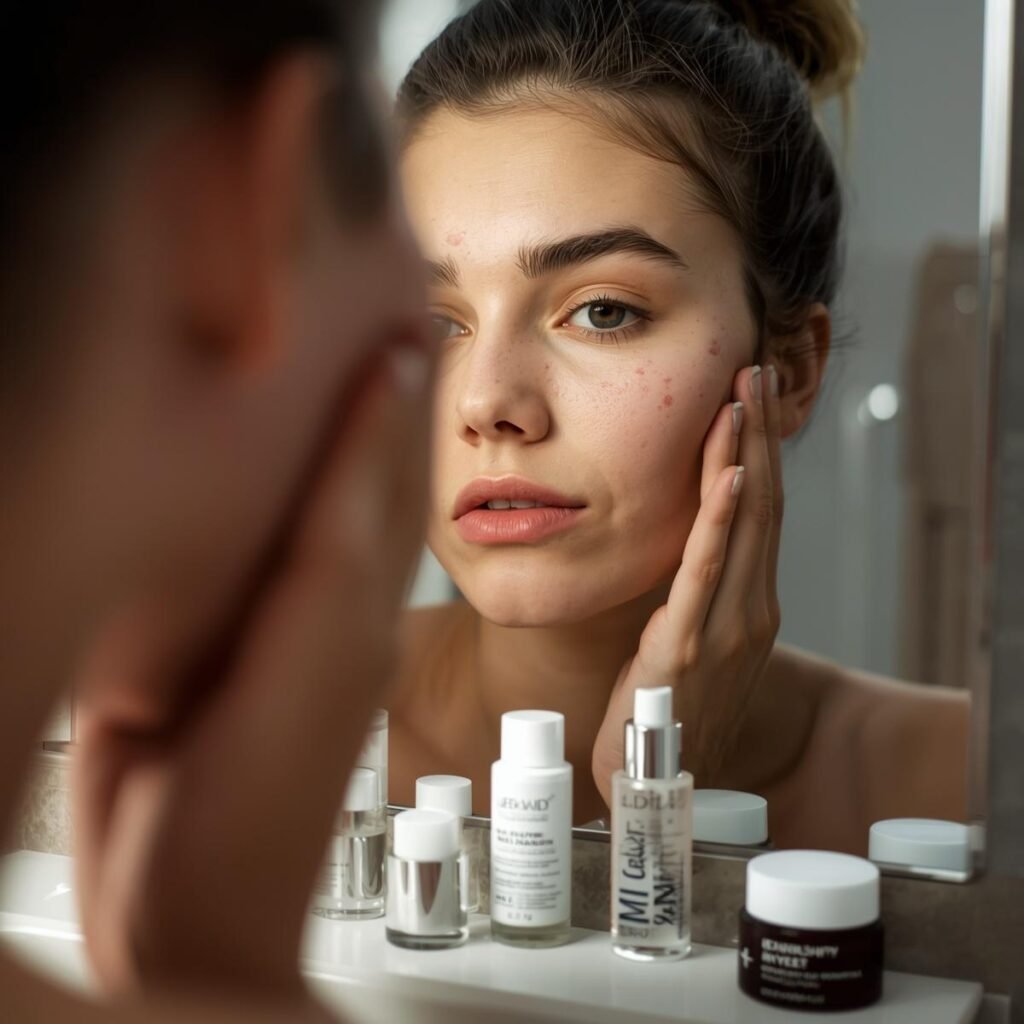

Acne is one of the most common skin conditions, affecting people of all ages. It occurs when hair follicles become clogged with oil, dead skin cells, and bacteria, resulting in pimples, blackheads, or cysts. Understanding the causes of acne is the first step in effective prevention and treatment.
What Is Acne?
Acne develops when sebaceous glands produce excess oil (sebum) that combines with dead skin cells, blocking pores. Bacteria, particularly Cutibacterium acnes, multiply in clogged pores, triggering inflammation and visible breakouts.
Types of acne include:
- Whiteheads: Closed clogged pores
- Blackheads: Open clogged pores with oxidized sebum
- Papules: Small red, inflamed bumps
- Pustules: Pimples with pus
- Nodules/Cysts: Deep, painful bumps under the skin
Causes of Acne
1. Excess Sebum Production
- Overactive oil glands make skin more prone to clogged pores
- Hormones, particularly androgens, increase sebum production
2. Dead Skin Cell Accumulation
- Slower skin turnover leads to buildup
- Pores become blocked, creating a breeding ground for bacteria
3. Bacterial Overgrowth
- C. acnes bacteria thrive in blocked pores
- Leads to inflammation, redness, and pus formation
4. Hormonal Changes
- Puberty, menstrual cycles, pregnancy, and menopause can trigger acne
- Androgen hormones increase oil production
5. Diet and Lifestyle
- High glycemic foods (sugar, refined carbs) may worsen acne
- Dairy consumption may affect some individuals
- Stress increases cortisol, which can trigger breakouts
6. Skincare and Cosmetic Products
- Comedogenic or heavy products can clog pores
- Inadequate cleansing or over-washing can irritate skin
7. Environmental Factors
- Pollution, humidity, and heat can worsen acne
- Sweat and friction (mask-wearing, tight clothing) may trigger breakouts
How to Treat Acne
1. Cleansing
- Wash face twice daily with a gentle, non-comedogenic cleanser
- Remove excess oil, dirt, and makeup without over-stripping
2. Topical Treatments
- Benzoyl Peroxide: Kills acne-causing bacteria
- Salicylic Acid: Exfoliates pores and reduces inflammation
- Retinoids: Promote cell turnover and prevent clogged pores
- Azelaic Acid: Reduces redness and kills bacteria
3. Oral Treatments
- Antibiotics: Reduce bacterial overgrowth in moderate cases
- Hormonal Therapy: Birth control or anti-androgen medications for hormonal acne
- Isotretinoin: For severe, resistant acne
4. Professional Treatments
- Chemical peels to exfoliate skin and unclog pores
- Light and laser therapy to reduce bacteria and inflammation
- Extraction by professionals for comedones
Daily Skincare Tips for Acne
- Use non-comedogenic and oil-free products
- Avoid touching or picking at pimples
- Moisturize even oily skin with lightweight formulas
- Apply sunscreen daily to prevent post-acne pigmentation
- Clean phone, pillowcases, and makeup brushes regularly
When to See a Dermatologist
- Persistent or severe acne that does not respond to over-the-counter treatments
- Cystic or painful acne
- Acne causing scarring or hyperpigmentation
Professional guidance ensures safe and effective treatment tailored to your skin type.
Frequently Asked Questions
Can diet really affect acne?
Yes. High-glycemic foods and dairy can trigger acne in some people, but effects vary individually.
Is acne only for teenagers?
No. Adult acne is common, particularly hormonal acne in women.
Can acne be cured permanently?
While acne can be controlled effectively, ongoing care is often required to prevent recurrence.
Is sun exposure good for acne?
Limited sunlight may temporarily improve inflammation, but excess UV exposure damages skin and can worsen acne scars.
Final Thoughts
Acne develops from a combination of excess oil, clogged pores, bacterial growth, hormones, lifestyle, and environmental factors. Treatment requires a comprehensive approach including cleansing, topical or oral medications, lifestyle adjustments, and sometimes professional procedures. Consistency, patience, and a tailored skincare routine are key to controlling acne and maintaining healthy skin.