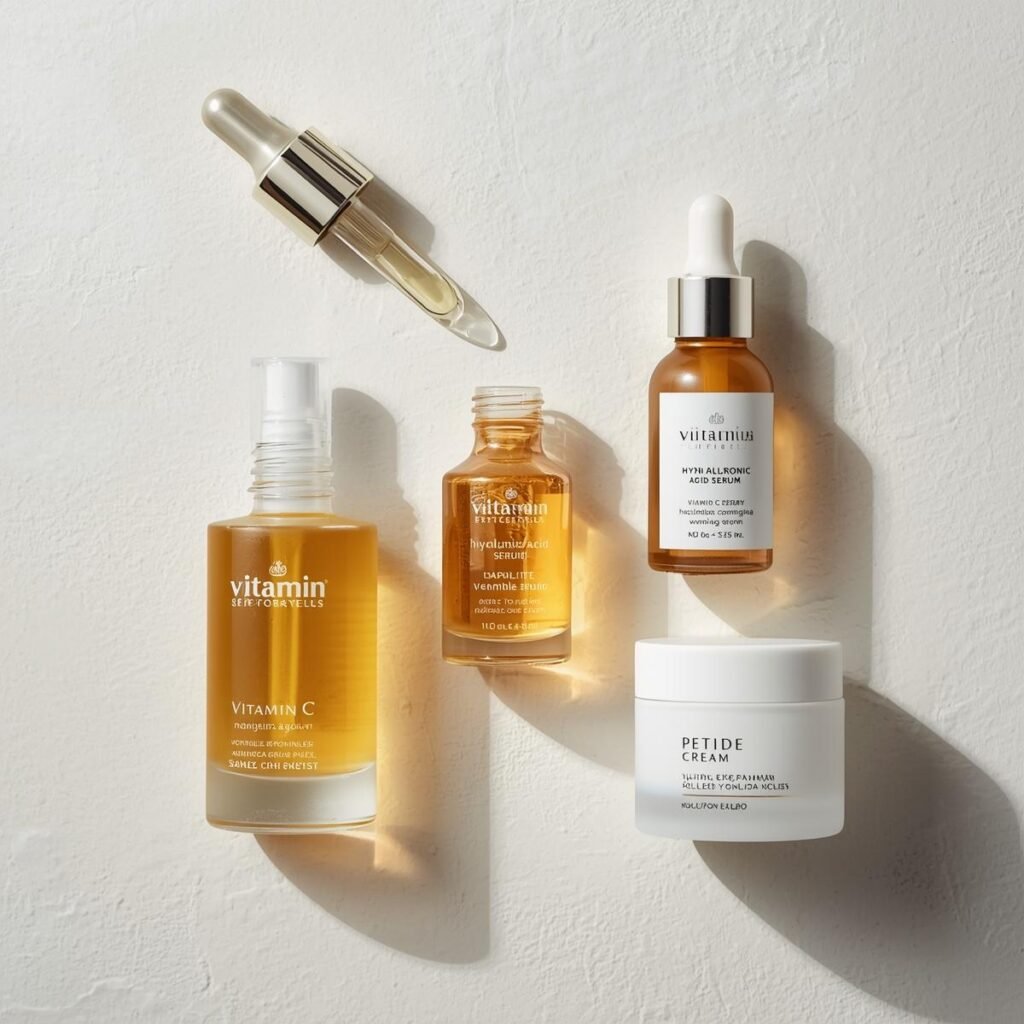

Preventing and reducing signs of aging requires using skincare ingredients that actively support skin health. Effective anti-aging ingredients improve firmness, reduce fine lines and wrinkles, enhance hydration, and protect against environmental damage. Understanding which ingredients work, how they function, and how to use them ensures long-term skin health and visible results.
Why Anti-Aging Ingredients Matter
Aging is caused by intrinsic (natural) and extrinsic (environmental) factors. While aging is inevitable, certain ingredients can:
- Support collagen and elastin production
- Protect skin from free radicals and oxidative stress
- Maintain hydration and barrier function
- Improve skin texture and tone
Using the right ingredients consistently maximizes anti-aging benefits.
Top Anti-Aging Ingredients
1. Retinoids (Retinol, Tretinoin, Retinaldehyde)
How they work:
- Promote cell turnover
- Stimulate collagen production
- Reduce fine lines, wrinkles, and pigmentation
Usage tips:
- Start with lower concentrations and gradually increase
- Apply at night
- Use sunscreen during the day to prevent sensitivity
2. Hyaluronic Acid
How it works:
- Humectant that attracts water to the skin
- Maintains hydration, plumps skin, and reduces fine lines
Benefits:
- Supports moisture retention
- Enhances the effectiveness of other products
Usage tips:
- Layer under moisturizer for best results
- Suitable for all skin types
3. Peptides
How they work:
- Small chains of amino acids
- Stimulate collagen and elastin production
- Improve firmness and elasticity
Benefits:
- Reduces sagging and fine lines
- Enhances overall skin structure
Usage tips:
- Can be combined with serums or moisturizers
- Gentle and suitable for sensitive skin
4. Antioxidants (Vitamin C, Vitamin E, Green Tea, Coenzyme Q10)
How they work:
- Neutralize free radicals
- Prevent oxidative damage caused by sun and pollution
Benefits:
- Brightens dull skin
- Reduces premature aging
- Protects from environmental stress
Usage tips:
- Apply vitamin C in the morning before sunscreen
- Store products in cool, dark places to maintain potency
5. Niacinamide (Vitamin B3)
How it works:
- Strengthens the skin barrier
- Reduces inflammation and oil imbalance
Benefits:
- Improves texture and elasticity
- Minimizes pore appearance
- Enhances hydration
Usage tips:
- Compatible with most other actives
- Suitable for sensitive skin
6. Ceramides
How they work:
- Lipids that make up the skin barrier
- Prevent moisture loss and protect against irritation
Benefits:
- Maintains hydration
- Supports barrier repair
- Reduces sensitivity and dryness
Usage tips:
- Found in creams, lotions, and serums
- Layer after treatment serums for optimal effect
7. Alpha Hydroxy Acids (AHAs) and Beta Hydroxy Acids (BHAs)
How they work:
- Exfoliate dead skin cells
- Stimulate cell renewal
- Improve texture and tone
Benefits:
- Smoothes fine lines
- Fades hyperpigmentation
- Enhances absorption of other products
Usage tips:
- Use 1–3 times per week depending on tolerance
- Apply sunscreen during the day
8. Sunscreen (Zinc Oxide, Titanium Dioxide, Chemical Filters)
How it works:
- Protects skin from UVA and UVB damage
- Prevents collagen breakdown and pigmentation
Benefits:
- Prevents premature aging
- Reduces wrinkles and sunspots
- Maintains skin health over time
Usage tips:
- Apply daily, even on cloudy days
- Reapply every 2–3 hours outdoors
Combining Anti-Aging Ingredients
- Layer products from thinnest to thickest
- Use antioxidants in the morning and retinoids at night
- Avoid combining multiple strong acids with retinoids initially
- Peptides, ceramides, and hyaluronic acid can be used with most other actives
Anti-Aging Routine Example
Morning:
- Cleanser
- Antioxidant serum (Vitamin C)
- Moisturizer with ceramides
- Sunscreen
Night:
- Cleanser
- Retinol or peptide serum
- Hydrating serum (hyaluronic acid)
- Moisturizer
Consistency is crucial for long-term results.
Lifestyle Factors Supporting Anti-Aging
- Balanced diet rich in antioxidants
- Adequate sleep
- Regular exercise
- Hydration
- Stress management
Lifestyle choices enhance the effectiveness of topical anti-aging ingredients.
Signs Anti-Aging Ingredients Are Working
- Smoother texture
- Faded fine lines and wrinkles
- Improved firmness
- Brighter, more even skin tone
- Healthier, more resilient skin
Frequently Asked Questions
Can I start anti-aging in my 20s?
Yes. Early prevention with antioxidants, sunscreen, and hydration slows visible aging.
Do I need multiple anti-aging ingredients?
Combination of ingredients provides comprehensive benefits, but start gradually to avoid irritation.
How long before results appear?
- Hydration: 1–2 weeks
- Brightening: 4–6 weeks
- Anti-aging (wrinkles, firmness): 3–6 months
Are natural ingredients effective?
Many plant-based antioxidants and peptides work effectively, but potency and concentration matter.
Final Thoughts
Effective anti-aging relies on a combination of proven ingredients, consistent skincare, and healthy lifestyle habits. Retinoids, hyaluronic acid, peptides, antioxidants, ceramides, and sun protection form the foundation of an anti-aging routine. Starting early, using products correctly, and supporting skin with proper hydration and nutrition ensures long-term health, improved texture, and reduced signs of aging.